
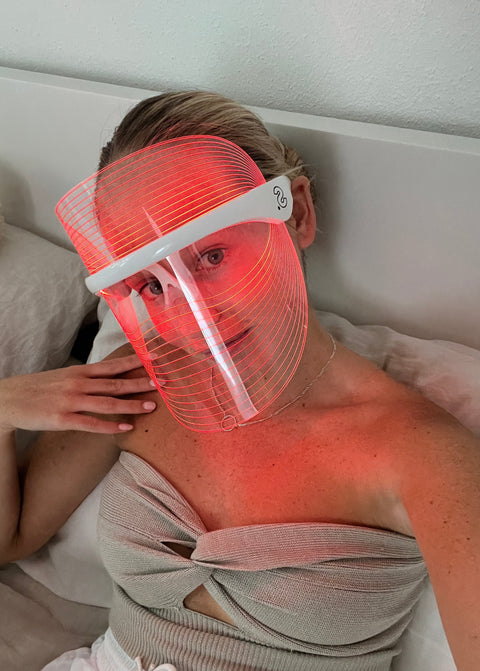
How Long Does LED Light Therapy Take to Work? What to Expect From Your LED Mask
If you’ve just started using an LED mask, chances are one of your first questions is: "how long until I actually see a difference?"
The short answer? LED light therapy isn’t a quick overnight fix and that’s completely normal.
Think of it a bit like exercise. One workout isn’t going to completely change your body, but when you stay consistent, that’s when you start to notice results. LED light therapy works in much the same way, consistency is key.
So, here’s a realistic look at what you can expect when you start using our LED mask consistently.
The first few weeks
If you’re using blue light for acne, active breakouts will start to look less red or inflamed, and you may notice new blemishes disappearing quicker.
If you’re focusing on fine lines or signs of ageing, your skin may start to feel smoother, softer or a little more plump before you start notice a dramatic change in lines.
For redness or inflammation, you will notice your skin looking calmer and more even, with less visible irritation.
If pigmentation or uneven skin tone is your main concern, your skin may begin to look brighter and more even overall, although pigmentation can takes longer to fade.
The most important thing at this stage is simply staying consistent.
With the Selfcare Social LED Mask, we recommend using your mask 3 to 5 times per week.
(We recommend taking a before photo to keep track of progress).
Around 4 to 6 weeks
By around 4 to 6 weeks, the changes should start to feel more noticeable.
This is often when you begin noticing the difference in photos, makeup sits a little better, your skin looks more even, and the improvements feel more consistent rather than something you only notice occasionally.
Breakouts will be appearing less often and clearing more quickly. Redness will look less persistent, while skin texture will feel smoother and more refined. If you’re targeting pigmentation, darker areas will begin to look softer and your overall skin tone more even.
Fine lines usually take longer to visibly change, but by this stage you may notice your skin looking more glowy, more hydrated and slightly firmer overall.
This is also a good time to compare your skin to the photos you took before starting, because gradual changes can be much easier to spot side by side than in the mirror every day.
Around 8 to 12 weeks
Consistent use will be giving you a much clearer idea of how your skin is responding.
This is when longer-term changes become easier to see, especially if you’re using red and near-infrared light for fine lines, firmness and overall skin rejuvenation.
Your skin will look smoother, firmer and more plump, with fine lines appearing softer and your overall complexion looking more refreshed. If you’ve been using LED for acne, redness or pigmentation, you may will notice that improvements are more consistent rather than coming and going from week to week.
Because these changes happen gradually, they can be surprisingly easy to miss when you’re looking at your skin every day.
That’s why we always recommend taking progress photos. Take one in natural lighting before your first session, then again at 4, 8 and 12 weeks, keeping the lighting and angle the same for all photos.
Seeing the photos side by side can make the progress much easier to notice.
Which LED light should you use?
Different wavelengths of LED light work differently within the skin, so your choice should depend on what you’re trying to target.
Blue Light
Our 495nm Blue LED is ideal for breakout-prone skin. Blue light is used to target acne-causing bacteria and support clearer-looking skin.
If breakouts are your biggest concern, this will likely be the setting you reach for most often.
Amber Light
Our 590nm Amber LED is ideal for skin that looks dull, uneven or in need of a little brightening.
It’s a great option if your main concerns are uneven tone, pigmentation or skin that simply looks tired and lacking in radiance.
Red + Near Infrared Light
Our 660nm Red LED combined with 850nm Near Infrared is best for concerns such as fine lines, firmness, skin texture and overall skin rejuvenation.
Red and near-infrared light are commonly used to support collagen production and skin repair, making this a great option if you’re focusing on signs of ageing or want your skin to look smoother, firmer and more refreshed.
You don’t have to stick to just one setting either. You can alternate between different wavelengths throughout the week depending on what your skin needs most.
Why consistency matters more than using it every day
One of the biggest mistakes people make with LED light therapy is using their mask a handful of times, forgetting about it for two weeks, then wondering why they aren’t seeing results.
Your LED mask needs to become part of your routine.
That doesn’t mean it has to feel like another job on your to-do list.
Leave it somewhere you will see it. Add your session to your evening skincare routine. Put it on while watching an episode of your favourite show.
Fifteen minutes, a few times a week, is much easier to stick to than an 12 step skincare routine you will eventually give up on.
Can skincare make a difference too?
Absolutely, we recommend using aftercare!
Start your LED session with freshly cleansed, dry skin. Once your 15-minute treatment is finished, follow with your usual serums and moisturiser.
If your skin is feeling particularly dry or you want an extra hydration boost, follow your LED session with our Bio Collagen Face Mask or hydrating skincare.
And don’t forget SPF during the day. You can invest in all the skincare in the world, but protecting your skin from UV exposure is still one of the most important things you can do for it.
So, when should you expect results?
There’s no single timeline that applies to everyone.
The best approach is to stop looking for a dramatic overnight change and focus on what your skin looks and feels like over a few months.
Take your before photos, stay consistent and give your skin time.
Shop the Selfcare Social LED Light Therapy Face Mask here.

